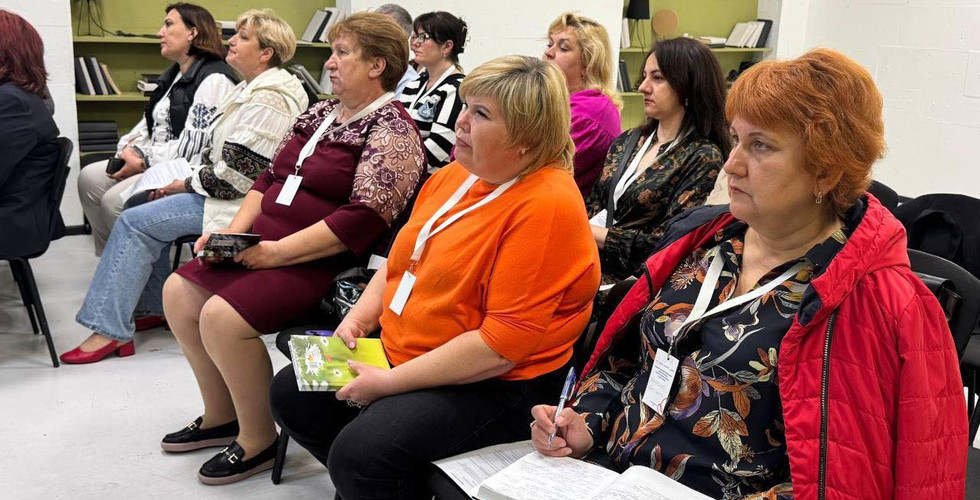
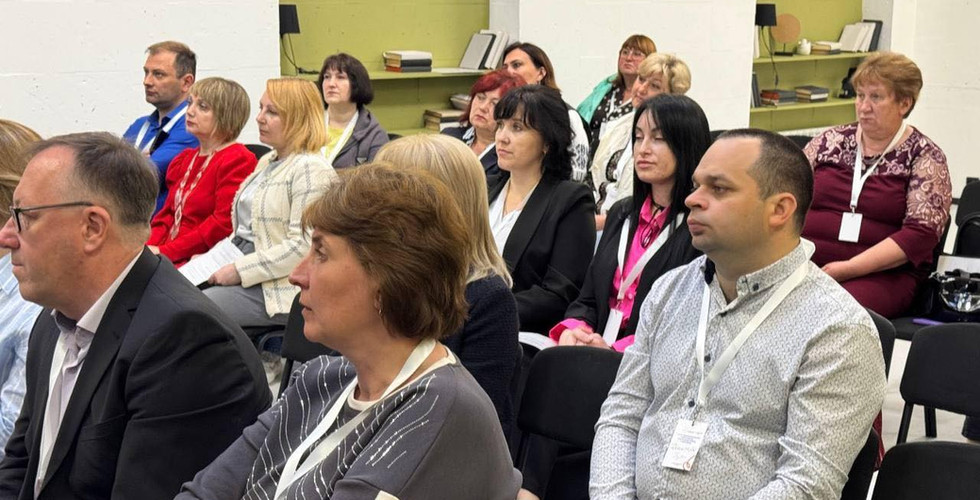
Kyiv hosted a seminar on cooperation between communities in education sector
- May 18
- 3 min read
Experts of DECIDE Project, representatives of communities, heads of education authorities, members of the ‘Education’ Platform of the All-Ukrainian Association of Amalgamated Territorial Communities, and other experts discussed cooperation between communities as a tool for implementing the reform of specialised senior secondary schools.
The event was organised by DECIDE Project, the All-Ukrainian Association of Amalgamated Territorial Communities, the Ministry of Education and Science of Ukraine, and the National Agency on Corruption Prevention.
The discussion focused on:
national and regional policy on the reform of specialised senior secondary schools;
support tools and grant opportunities for the development of cooperation between communities in education;
integrity in cooperation between communities: risk management, trust, and sustainable solutions;
practical case studies of cooperation agreements between communities in establishing a network of academic lyceums.
Keynote speakers at the seminar included:
Nadiia Kuzmychova, Deputy Minister of Education and Science of Ukraine;
Valentyna Poltorak, DECIDE Project Manager;
DECIDE National Experts: Serhii Yatskovskyi, Yana Brusentsova, and Andrii Matsokin;
Aliona Khylko and Kateryna Pavlushenko, Experts of the National Agency on Corruption Prevention;
Tetiana Kolybelnyk, Head of the Department of Education, Youth and Sport at the Myrhorod City Council.
The event was moderated by Olha Barabash, Expert of the Education Platform of the All-Ukrainian Association of Amalgamated Territorial Communities and DECIDE Expert.
Nadiia Kuzmychova outlined the rationale behind the reform of specialised senior secondary schools, in particular the need to improve the quality of education, address learning losses, and provide students with real choices for their educational path after Grade 9.
Special attention was paid to new models for academic lyceums and vocational colleges, the development of specialised education, the modernisation of the educational environment, laboratories, bomb shelters, transport infrastructure, and the launch of a career guidance system.
Valentyna Poltorak, DECIDE Project Manager, presented the results of work in terms of cooperation between communities.
With the support of DECIDE Project, 22 cooperation agreements have already been signed between 56 communities. The main forms of cooperation have been the implementation of joint projects, the delegation of tasks, and the joint financing of publicly owned institutions.
Valentyna Poltorak emphasised, ‘The reform of specialised senior secondary schools requires a new culture of cooperation among communities – centred on shared responsibility for quality education and the development of a capable network of academic lyceums.
The shared use of resources, partnerships between communities, and trust in decision-making open up more opportunities for students to choose their specialisations.’
A new grant programme from DECIDE Project was also presented during the seminar, which aims to develop a network of academic lyceums in the Project’s eight partner regions.
The 50 winning communities are expected to be granted funding of up to UAH 1 million to support the development of an academic lyceum.
During the event, Serhii Sharshov, Deputy Executive Director of the All-Ukrainian Association of Amalgamated Territorial Communities, stated, ‘Of more than 800 projects that have already been completed or are currently being implemented in compliance with the Law of Ukraine ‘On Cooperation between Territorial Communities’, a third are initiatives in education.’
The participants of the seminar also learned about the experience of Myrhorodska community in Poltava region, which is actively developing partnerships with Ukrainian and foreign communities and is working to create the conditions for the functioning of an academic lyceum for children from neighbouring communities.
Based on the results of the seminar, the participants underlined that inter-municipal cooperation is an important tool for implementing the reform of specialised senior secondary schools and a necessary condition for ensuring accessible and high-quality education in communities.
DECIDE Project is implemented by NGO DOCCU and PHZH International Projects in Education with the support of the Embassy of the Swiss Confederation in Ukraine.
To view the photo gallery, click on the photo.